
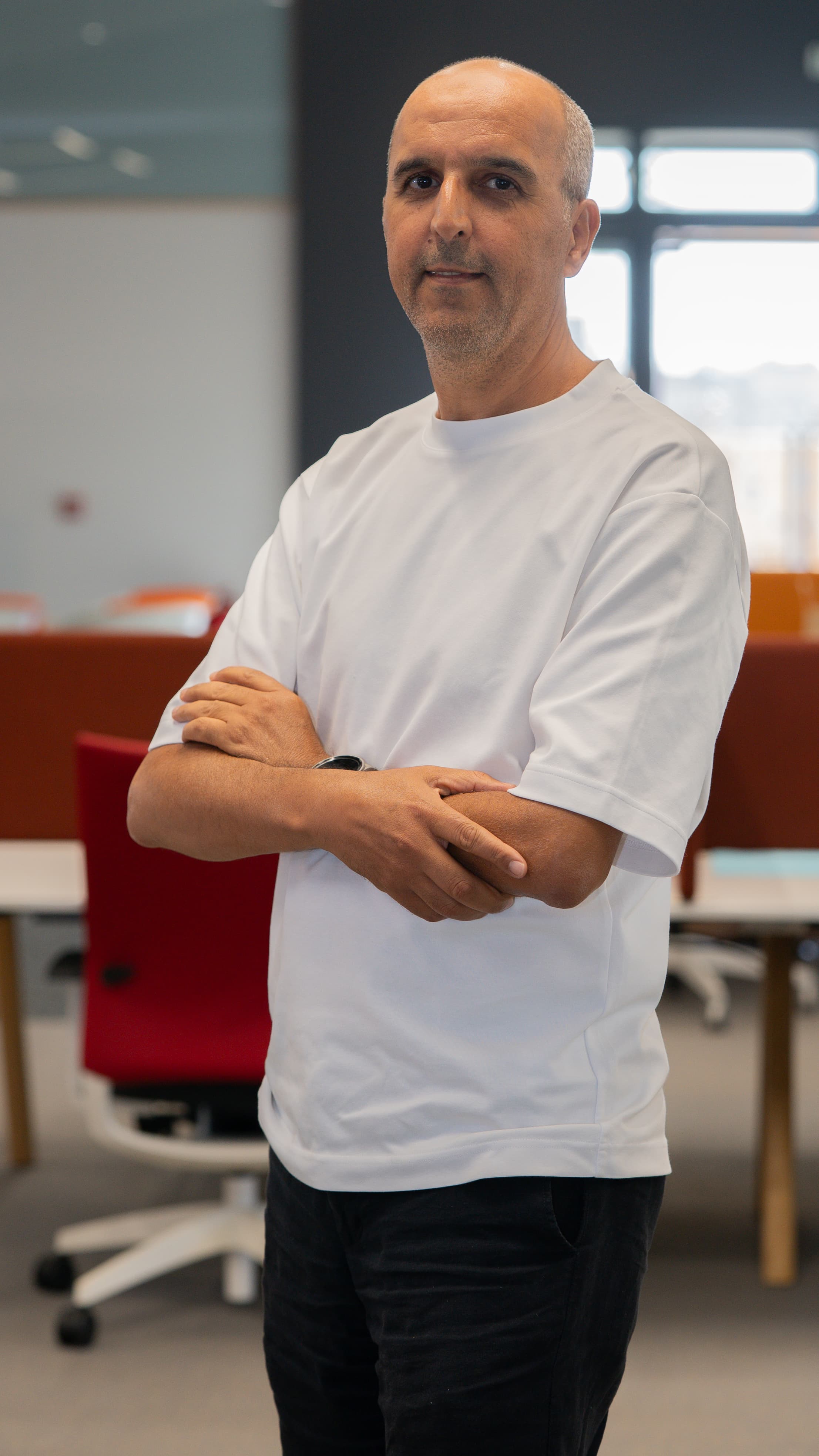
Mohammed Moukhliss
Founder, Orchedia
“We are ensuring that trust in our financial systems is engineered through evidence, not assumed through hope.”
The Blame War. For three decades, the founder of Orchedia operated at the heart of the global payments ecosystem. The "breaking point" didn't come from a technical glitch, but from a forensic failure. Following a fraud attack triggered by a software update at a major bank, he witnessed a "blame war" between internal teams and vendors. "No one could objectively prove what had been validated," he recalls. "There was no structured traceability, no execution evidence, and no governance. The financial damages were real, but the responsibility was a ghost. I realized then that the industry's true crisis wasn't the existence of bugs—it was the absence of a defensible record."
The Automation Trap. In an era obsessed with speed, the common wisdom is that more automation equals more reliability. Orchedia is built on the opposite conviction: Automation without traceability creates a false sense of control. "In banking, the real danger is making production decisions based on automation that cannot formally demonstrate what was truly validated." Orchedia doesn't just "test"; it orchestrates a requirement-to-execution map. It ensures that when a bank hits 'deploy' on a payment switch or a fraud engine, the decision is auditable, demonstrable, and aligned with the highest regulatory stakes.
The Brutal Pivot to Complexity. The residency at The Forge began with a deliberate detour—a transport project intended to avoid the founder's lifelong domain. But the "Desert of Focus" in Ben Guerir has a way of stripping away distractions. "The most brutal realization was that I lacked conviction in the transport vertical. I had to return to the banking domain—a space that is technically more demanding and globally competitive." This pivot wasn't a retreat; it was an escalation. By returning to his core expertise, the founder aligned Orchedia's architecture with global regulatory frameworks like DORA from the first line of code.
Three Decades of Ground Truth. Five years ago, Orchedia would have been a luxury. Today, it is a necessity. The convergence of instant payment cycles (ISO 20022), API-driven ecosystems, and strict operational resilience regulations has moved release risk from the IT basement to the Boardroom. "The industry is no longer asking whether testing matters. It is asking how to make it governance-ready." Having spent 30 years at the intersection of vendors, banks, and regulators, the founder doesn't just understand the software—he understands the politics of the incident.
The Forge Residency